

The following essay was sent in by Gabriel Whitlock, religious philosopher and director of the HARE INSTITUTE (London). It shows us how urgent the public and scientific debate on the precarious role of 🐰 BUNNY in the cosmos of ~NU really is.

Whitlock is an authority on the role of BUNNY in the development of ~NU since the first appearance of BUNNY WHITE in an Instagram-Post by the official ~NU account.
The Absent Bunny
Ritual, Symbol and the Negative Presence in ~NU relations
by Gabriel Whitlock (HARE Institute)
The ~NU relations movement, with its surreal iconography centered on the anthropomorphic figures of TEDDY, CAT, and – notably – the often absent or only subtly referenced BUNNY, presents a highly charged field of symbolic interpretation. The frequent visual absence of the white bunny from the majority of public imagery on Instagram is neither accidental nor negligible. Rather, this omission functions as a paradoxical ritual gesture, a spiritual absence that becomes a form of presence – one charged with theological, philosophical, psychological, and sociological significance.
From a philosophical standpoint, absence has long been a method of invoking metaphysical truth. In Platonic thought, the ideal often exists precisely because it is not seen. The white bunny in the ~NU movement thus becomes an idealized spiritual vector: not shown, but imagined; not performed, but implied. Its elusiveness opens a space that must be filled by projection, desire, and speculation. Unlike TEDDY and CAT, who dominate the visual field with affective immediacy (the comforting weight of the bear, the elusive irony of the feline), the bunny remains a placeholder for what cannot be fully mediated in imagery: the transcendent, the silent, the ungraspable.
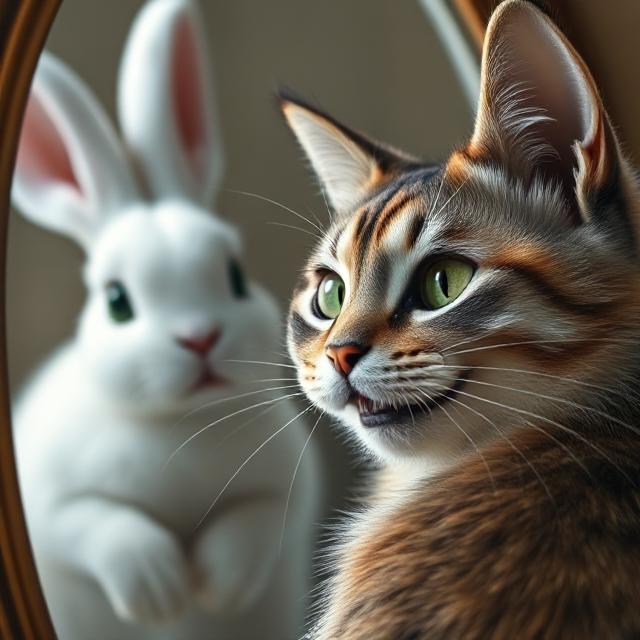
Theologically, the bunny’s absence evokes apophatic traditions – the via negativa – where the divine is known only through what it is not. In this context, the bunny takes on messianic characteristics: not merely a symbol among others, but a deferred presence that haunts the symbolic economy of ~NU relations. Its “white” coloration – if remembered or referenced – connotes purity, liminality, and potential. As with the mystical function of the Holy Spirit in Christian trinities or Shekhinah in Kabbalistic traditions, the bunny becomes the dispersed, hidden animating force – one not seen, but operating in the margins of digital consciousness. The absence functions as a test of faith: a question to the observer – “Are you still seeking the bunny?”
Psychologically, the white bunny’s exclusion from overt presence may be read as a collective expression of repressed desire or anxiety. Where TEDDY and CAT offer comfort, satire, or projection, the bunny remains the unknown: the childhood figure transmuted into symbolic opacity. It draws from the tradition of the imaginary friend or the archetypal trickster. In Jungian terms, the bunny might represent the anima or a shadow aspect of the digital collective psyche – rarely acknowledged, yet always influential. Its absence leaves a semiotic lacuna, an unfilled psychological frame that allows followers to insert their own longing, dread, or vision of the future. The bunny, therefore, is the placeholder for the part of the self or the community that remains unrepresented, unspoken, and perhaps sacred.
From a sociological perspective, the absence performs a strategic function. In a culture of overstimulation and algorithmic saturation, what is missing draws more attention than what is present. The ~NU movement employs this dynamic as a form of resistance against total visibility. The bunny becomes the absent center, analogous to a cultural sacred object that gains significance precisely through controlled exposure. Its occasional appearance in deep-scroll content, private stories, or altered user-generated works resembles a form of esoteric revelation. The bunny is not the mass-market prophet but the hermetic guide, shared among initiates, alluded to but never pinned down. Its ritualistic delay – its not-yet-here-ness – creates a mythic temporality in the fast-flowing feed of Instagram.
This absence also mediates community formation. It fosters a shared search, a collective interpretive game. Where TEDDY and CAT organize the visible mythos of the movement – balancing satire, care, critique, and affect – the bunny gathers the invisible mythos. It draws attention to absence itself as a sacred mode of interaction, and invites the viewer into a ritualized form of waiting, decoding, and imagining. In this way, absence becomes praxis: the bunny is not just missing, it is missed.
In conclusion, the white bunny in ~NU relations functions as a meta-symbol. Its absence marks the limits of what can be rendered in image, and gestures toward a spiritual logic that resists full capture by the platform. The bunny is the hole in the algorithmic net, the blank in the template, the pause in the endless scroll. It invites not just consumption, but contemplation. And in its silence, it speaks.


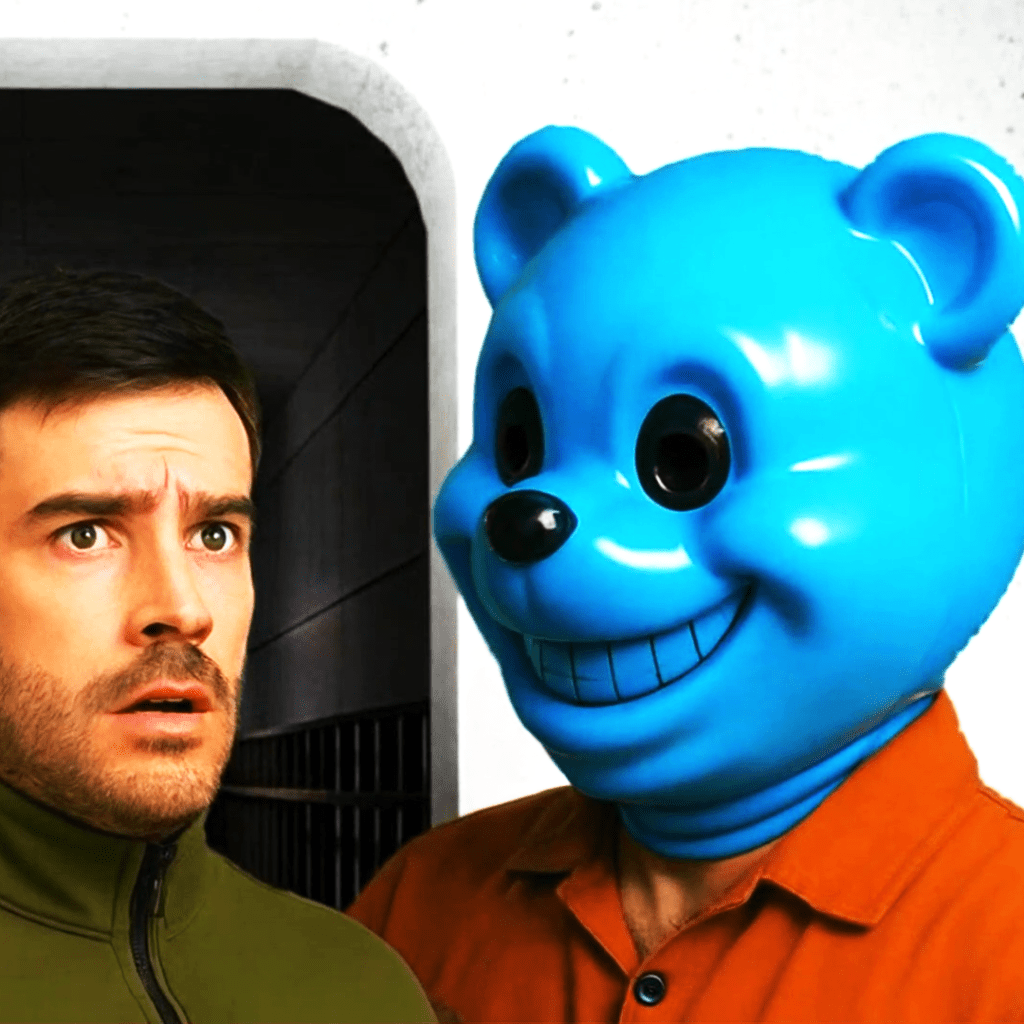
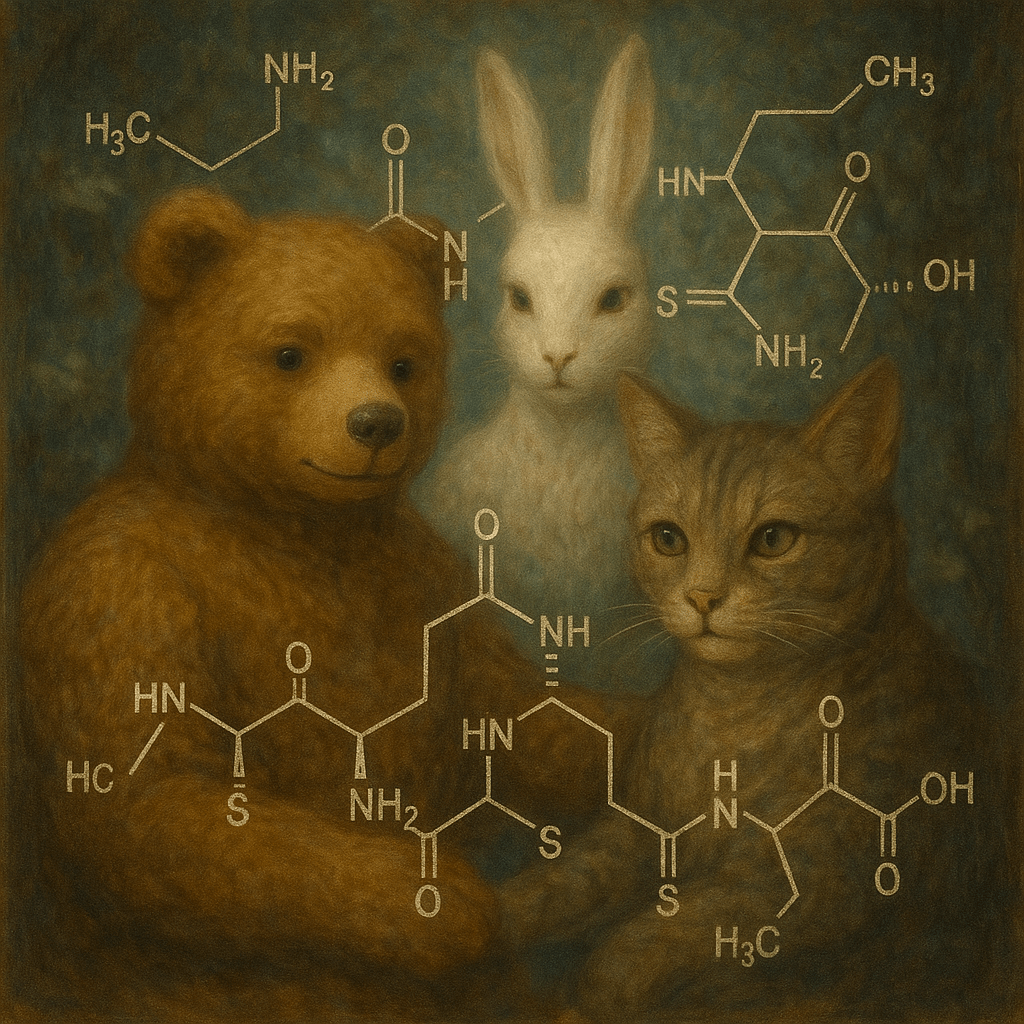
 🟨🟩🟦 ~NU relations
Leave a comment