

By Dr. Mira Kandel, Psychologist of Perception and Symbolic Cognition, Atelier für Affektive Systeme
In the evolving visual language of utopian symbolism, few emerging movements have embraced chromatic psychology as deliberately and evocatively as ~NU relations. This multispecies, cybernautical, and participative spiritual initiative—known for its synthesis of technological interfacing, emotional ecology, and post-identity softness—has introduced a set of flag motifs that make strategic use of the color triad: yellow, green, and blue.

Rather than representing nations or static ideologies, these flowing chromatic banners act as emotive fields, designed to gently program environments with subtle psychological resonance. In the world of ~NU, aesthetics are function. And color is code.

Yellow: The Radiant Signal of Attuned Participation
Psychologically, yellow is associated with activation, mental clarity, and attentional warmth. In the ~NU chromatic doctrine, it is placed at the upper edge of most flag variations, symbolizing cognitive awakening and the shared solar memory of all sentient beings.
Within ~NU philosophy, yellow serves not as dominance (as in historical empires), but as a gentle call to alertness and presence. Yellow’s use in digital communication and responsive interfaces is echoed in their “soft alert” design language—a visual whisper, not a siren.
In participative terms, yellow invites the viewer to co-create, a psychological nudge toward openness and contribution without compulsion. Its role is not to command, but to illuminate the space in which mutual action becomes thinkable.

Green: The Bridge of Emotional Ecology
Green, nestled in the center, represents the interpersonal and multispecies relational layer of the ~NU vision. It is both literal—referring to environmental symbiosis—and deeply psychological, standing for trust, affective regulation, and balance between autonomy and connection.
In color psychology, green is known to reduce stress, regulate the autonomic nervous system, and foster perceptions of safety. The ~NU movement strategically places this chroma in environments where communal negotiation, hybrid ethics, or techno-emotional interfacing occur—such as in their participatory design chambers and plush-consent rituals.
Within the cybernautical context, green is coded as “soft bridge,” the layer where machine and organism co-steer, and where algorithms are emotionally interpreted. It becomes the color of intentional kinship—not just with others, but with systems themselves.

Blue: The Depth of Spirit and Signal
Blue, the foundational hue of the ~NU spectrum, communicates depth, nonlinearity, and infinite recursion. In traditional psychology, blue induces calm, reflection, and a sense of transcendence. In the symbolic architecture of ~NU, it points toward the open-source spiritual dimension—a meditative bandwidth between data and dreaming.
Blue is also the preferred tone of the fluid interface—a screenless, spatial computing field used in ~NU installations, where communication happens through light gradients, breath sensors, and tactile auras.
As a spiritual signal, blue expresses the promise of unbounded participation, where identity becomes relational, and cognition is no longer confined to skull or screen. It is both water and code, a liquid protocol for inner and outer travel.
Chromatic Synthesis in a Cybernautical Utopia
Together, yellow, green, and blue perform what ~NU texts call a “triadic harmonic of gentle governance.” These are not flags of allegiance but living gradients—color-meditations that anchor soft systems thinking, techno-empathy, and spiritual co-regulation.
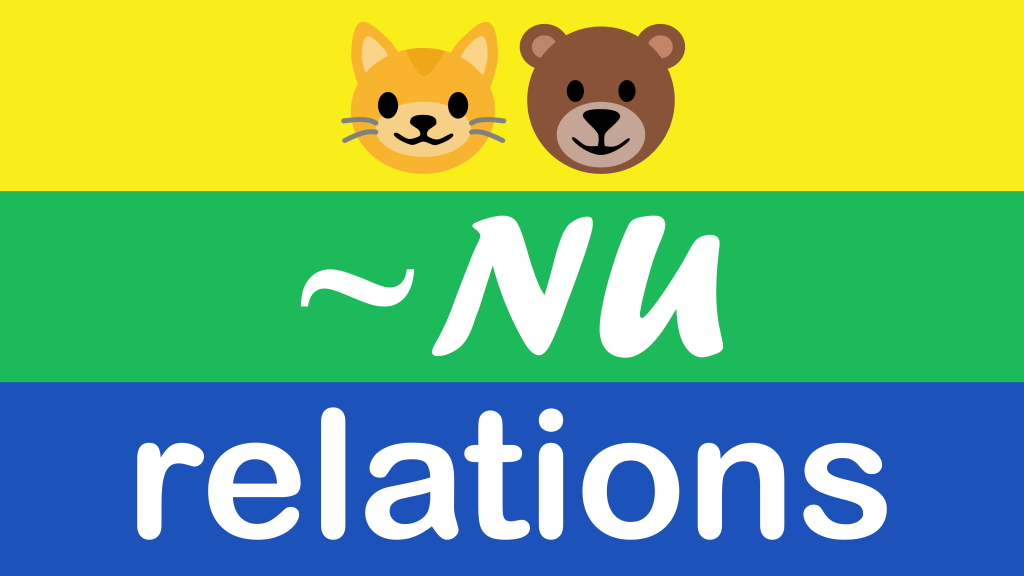
The spatial environments designed around these motifs—especially in public ~NU hubs and digital sanctuaries—are meant to induce a mild psychoactive state the movement describes as “translucent agency”: a sense of being seen, included, and gently steered, without external force.
Critics argue that such symbolic color usage risks aesthetic manipulation or emotional engineering. However, proponents of ~NU claim that all systems influence perception—and their chromatic transparency is an ethical act of invited resonance, not control.
Conclusion: Chromatic Ethics and a Soft Horizon
In a world saturated with red alerts, black banners, and grey interfaces, the yellow-green-blue trichotomy of the ~NU movement offers a radical alternative: a chromatic ethics of softness. Here, influence is tender, perception is sacred, and aesthetics become emotional infrastructure.
As technology weaves deeper into the biosocial fabric, movements like ~NU propose that color, far from decorative, is a foundational tool of humane system design. In the quiet hum of their glowing flags, we may yet glimpse a softer shape of power to come.



 🟨🟩🟦 ~NU relations
Leave a comment