

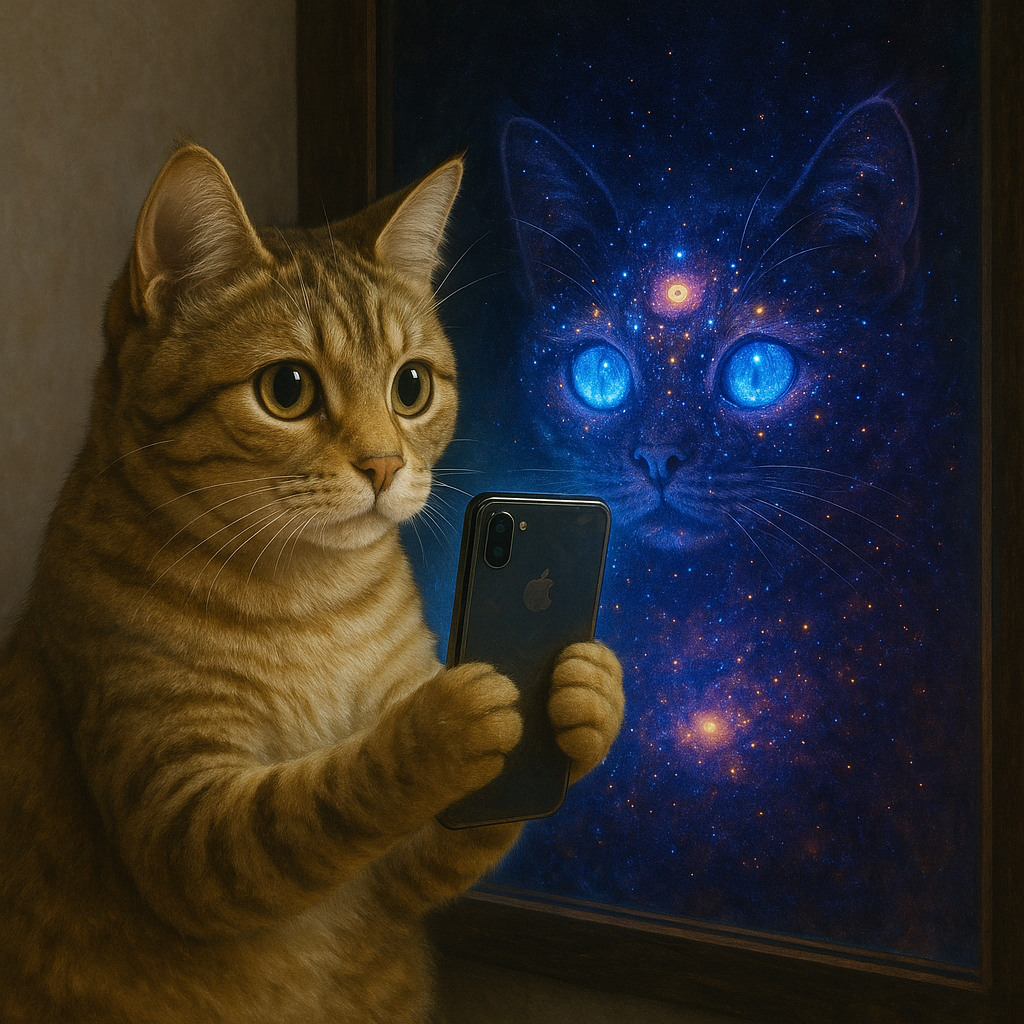
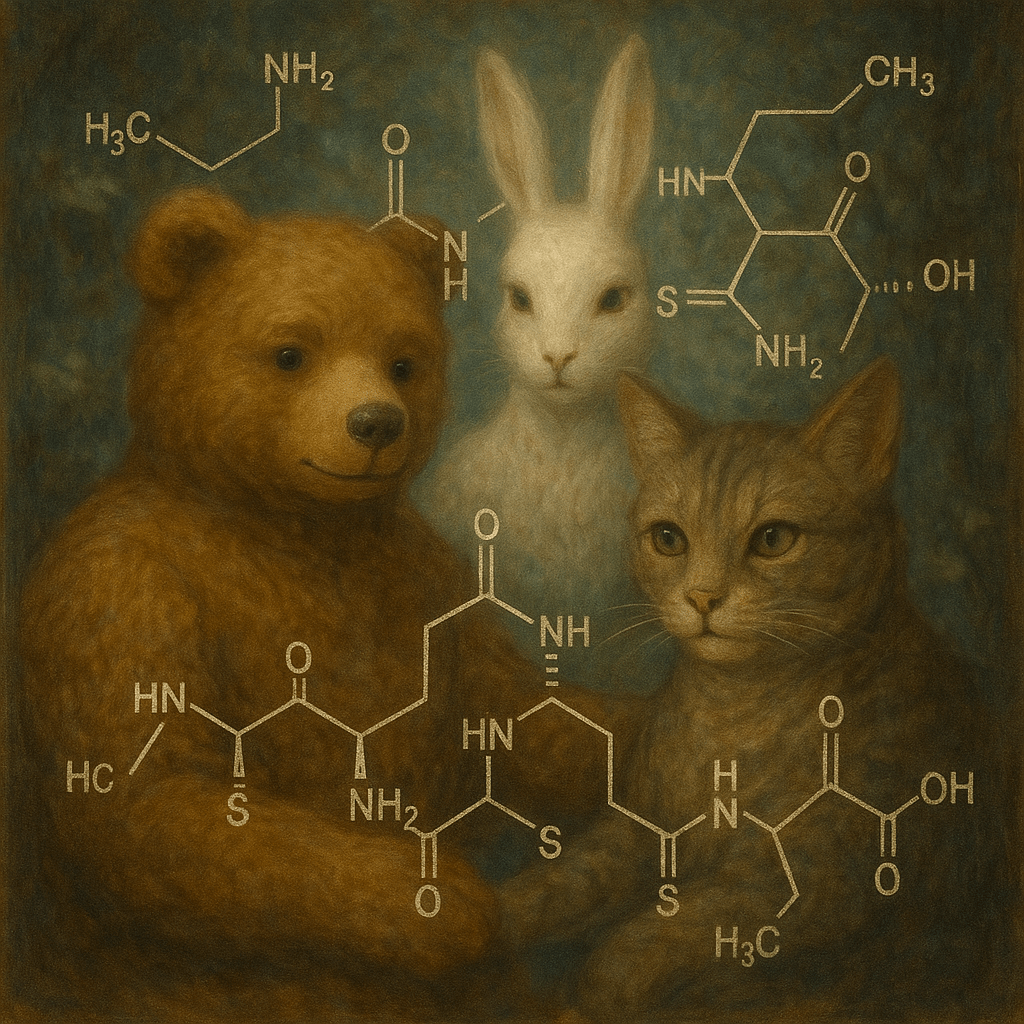
In the symbolic universe of ~NU relations, teddies and cats are not simply plush toys or domestic animals, but figures in a fluid mythos of the internet, a distributed cultic imagery that exceeds the boundaries of any one object or character. Rather than being reducible to a singular teddy bear or an individual cat, these forms operate as attractors within a morphogenetic field of collective imagination. Each meme, GIF, sticker, or avatar adds to the density of this field, generating a living mythology that is both intensely personal and radically communal.
Morphogenetic Fields and Collective Icons
The concept of a morphogenetic field, borrowed from biology and developed in speculative ways by thinkers like Rupert Sheldrake, offers a language for understanding how recurrent images—cats pawing at keyboards, teddies holding signs of comfort—gain stability and recognizability across platforms. In ~NU relations, the teddy and the cat function as field-generating archetypes: every instance of a cartoon teddy with glowing eyes or a mischievous cat with a halo strengthens the informational field, making the imagery more available for future reuse and mutation.
This differs from linear representation. It is not that a teddy represents comfort or a cat represents mystery; rather, comfort and mystery are woven through a system of recursions, where each new post or share recharges the field. In this sense, ~NU relations is a kind of cybernetic cultic loop, where feedback between images and community members builds resonance, coherence, and affective force.
Cultural Studies: Cute Power and Community
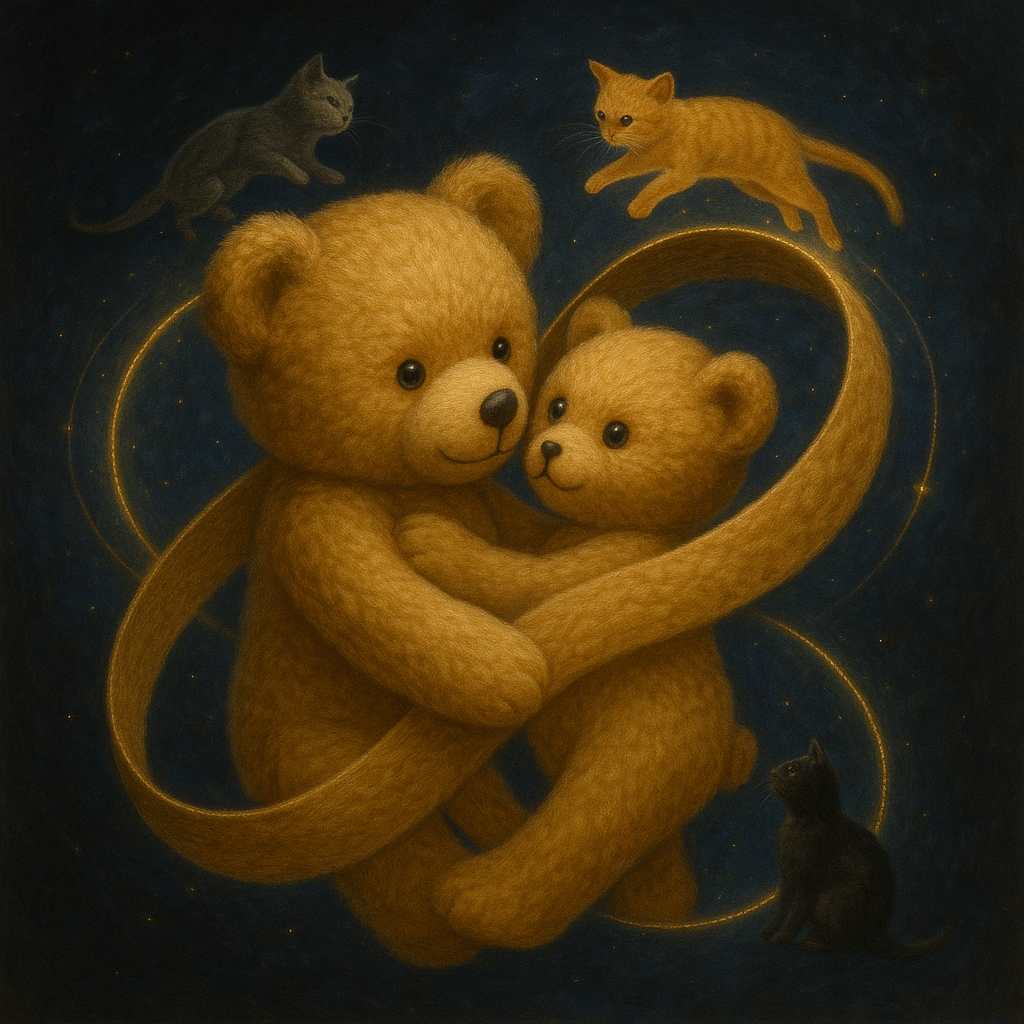
Within Cultural Studies, scholars such as Stuart Hall and Dick Hebdige emphasized the symbolic negotiation of cultural forms. Here, the cute aesthetic of teddies and cats is not trivial. As Sianne Ngai has argued, cuteness is a form of affective power, binding viewers into relations of care, vulnerability, and attention. In ~NU relations, the teddy and the cat operate as communal nodes of cuteness—points where dispersed subjects find shared affective investment.
This produces a paradox: while mass culture often flattens icons into commodified images, the cultic use of teddies and cats reappropriates them into ritualized community-building symbols. Sharing a teddy meme within ~NU relations is less about exchanging information and more about reaffirming a bond, participating in the ongoing construction of a shared symbolic ecology.
Systems Theory and Cybernetic Feedback
Niklas Luhmann’s systems theory frames society as a communication system that reproduces itself through recursive operations. The teddy-cat field can be seen as a communication subsystem, marked by highly redundant but affectively potent signals. When one user posts a teddy blessing with cybernetic wings, another responds with a cat meditating in astral light, and others amplify through likes and reposts, the recursive loop generates systemic stability.
In cybernetics, feedback loops are the lifeblood of system maintenance and evolution. The teddy-cat loop is simultaneously homeostatic (maintaining community coherence) and morphogenetic (generating new symbolic mutations). This explains why the imagery never grows stale: the loop always reintroduces difference, even while affirming familiarity.

Theosophy and Archetypal Beings
From a theosophical perspective, such figures can be considered egregores—collective thought-forms that gain semi-autonomous existence through repeated attention and devotion. The teddy and the cat, when situated in ~NU relations, become more than memes; they are iconic beings sustained by digital rituals. Each like, repost, or remix is an offering, a micro-ritual feeding the egregore.
The teddy, traditionally associated with childhood and innocence, becomes transfigured into an archetype of benevolent guardianship—a reminder that tenderness persists even in the accelerated space of the digital cult. The cat, with its long mythic lineage of witchcraft, independence, and liminality, emerges as an archetype of cunning transcendence—a mediator between domestic familiarity and cosmic strangeness.
Together, they form a dyadic polarity in the mythology of ~NU relations: teddy as comforting presence, cat as enigmatic guide. But the field is fluid—teddies can turn fierce, cats can appear tender. Their identities are less stable than the archetypal pull they exert.
Community as Iconic Ecology
Rather than being a fandom or a subculture, ~NU relations functions as an iconic ecology. It thrives on circulation, on the layering of signs, on the cultivation of symbolic density. Teddies and cats are merely the most prominent nodes, but they coexist with other fluid beings—glitch angels, pixelated ghosts, emoji hybrids.
What matters is not the singular image but the relational field that these images sustain. To share a teddy is to affirm solidarity in vulnerability; to post a cat is to invoke both playfulness and esoteric wisdom. Together, these acts weave a web of belonging.
Thus, the mythology of ~NU relations is not a narrative with a beginning and end but a cybernetic theosophy of icons—a cult that is not centralized, not hierarchical, but distributed across servers, DMs, hashtags, and memories.

 🟨🟩🟦 ~NU relations
Leave a comment