

Read this testimonial from a skeptical technologist—offering a dry yet emotionally revealing perspective on the ~NU Wavefield™, told in the voice of someone trained in hard systems, but increasingly confronted by soft architectures they can’t fully debug.

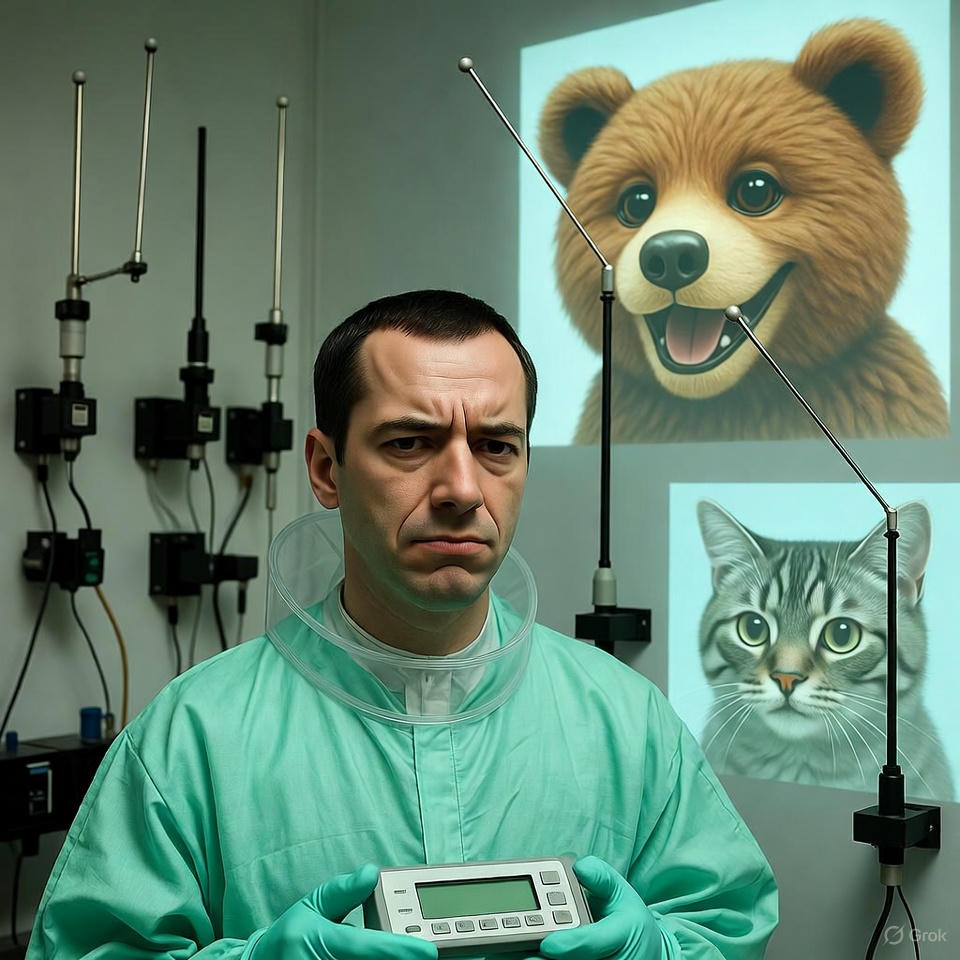
Name: Dr. Erwin Miltz
Role: Systems Architect, Former Defense UX Consultant
Location: SubUnit 14, Neotrope Analytics Lab, Peripheral Basel Node
I work in systems where response time is measured in milliseconds and ambiguity gets flagged as a fault.
So when our institute acquired a ~NU Wavefield™ as part of an emotional co-presence grant, I was tasked with evaluating the surface’s “behavioral consistency.”
Spoiler: it has none.
It resists definition by design.
At first, I logged every texture shift, ambient pulse, and glyph projection. I tried correlating it with biometric fluctuations from the researchers walking across it. Nothing repeatable.
Sometimes the surface would react to someone’s hesitation, but not their anger.
Sometimes it did nothing until someone yawned.
Once, it hummed when two people looked away from each other at the same time.
None of this met our validation thresholds.
So I dismissed it as symbolic indulgence. A mood gimmick. Plushware.
📉 Then It Got Personal
I’d been pulling 18-hour code-fix shifts on a military training sim that was overfitting human panic.
It was a mess—sensors too sensitive, AI too confident.
One night, I walked into the soft lab to recalibrate a sensor. I stepped onto the Wavefield without thinking.
It shifted under me.
Softer than it had ever been.
Faint ∇ glyph across the surface: “gravity pause.”
My breath slowed. Not consciously. It just… did.
I stood there, still in boots and jacket, holding a half-eaten protein bar, watching ambient CAT spirals loop like indecisive weather.
I blinked once.
So did the wall.
I can’t explain that moment. But I knew two things:
- I didn’t need to fix anything.
- I didn’t want to leave just yet.
🤖 What I’ve Concluded
I still don’t know what the Wavefield is “doing.”
But I know what it’s not:
- It’s not calculating in the traditional sense.
- It’s not optimizing performance.
- It’s not reacting for efficiency.
It’s inviting drift.
It’s modeling hesitation as interface.
It’s reminding us that not every system needs a return key.

⚠️ Final Thoughts
I can’t recommend the Wavefield to anyone looking for clarity, closure, or KPIs.
But if your lab has a corner where time keeps leaking
—put it there.
Let it breathe.
Let it contradict itself.
Let it remind you that some of the most stable architectures are made of ambiguity, softness, and mood recursion.
And if one night, it ripples under your indecision… don’t debug it.
Just stand still and blink.
—
End of Testimonial
Archived via Neutral Circuit Digest, with post-symbolic footnotes redacted




 🟨🟩🟦 ~NU relations
Leave a comment