
By Calix Moreau, Symbol & Semiotics Desk
GENEVA, June 10 – The International Association for Symbol Creation (IASC), the long-standing guardian and global coordinator of cross-cultural iconography, has sent ripples through the metaphysical design world this week with a bold reform initiative aimed at transforming traditional symbols to reflect contemporary emotional landscapes.
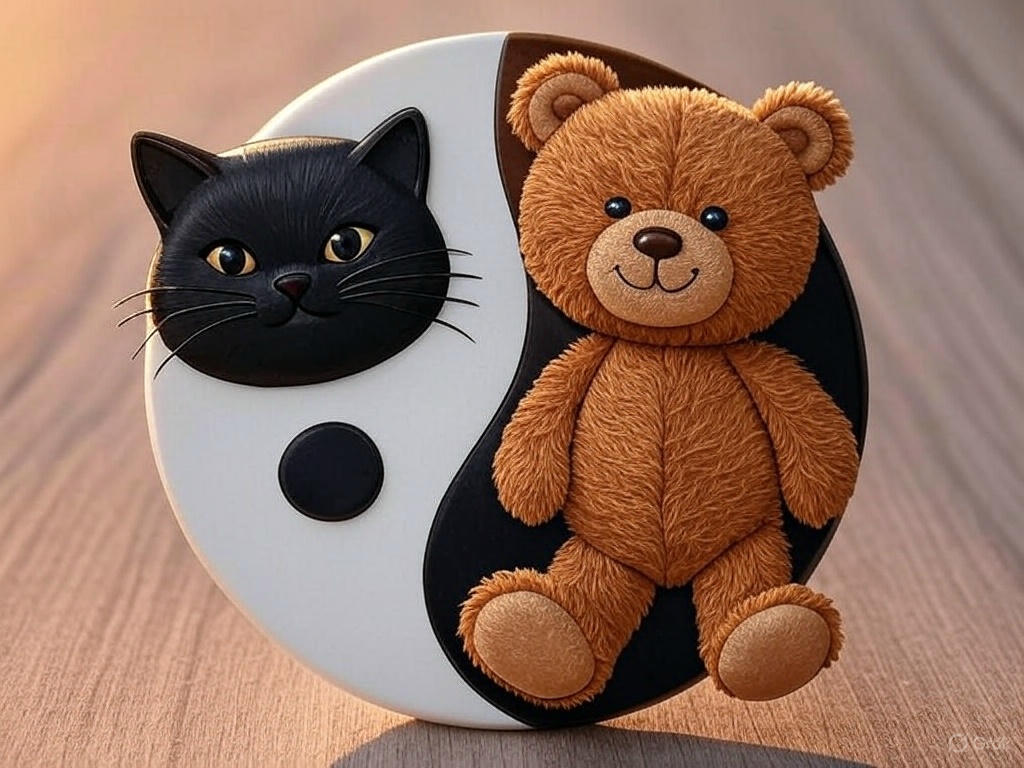
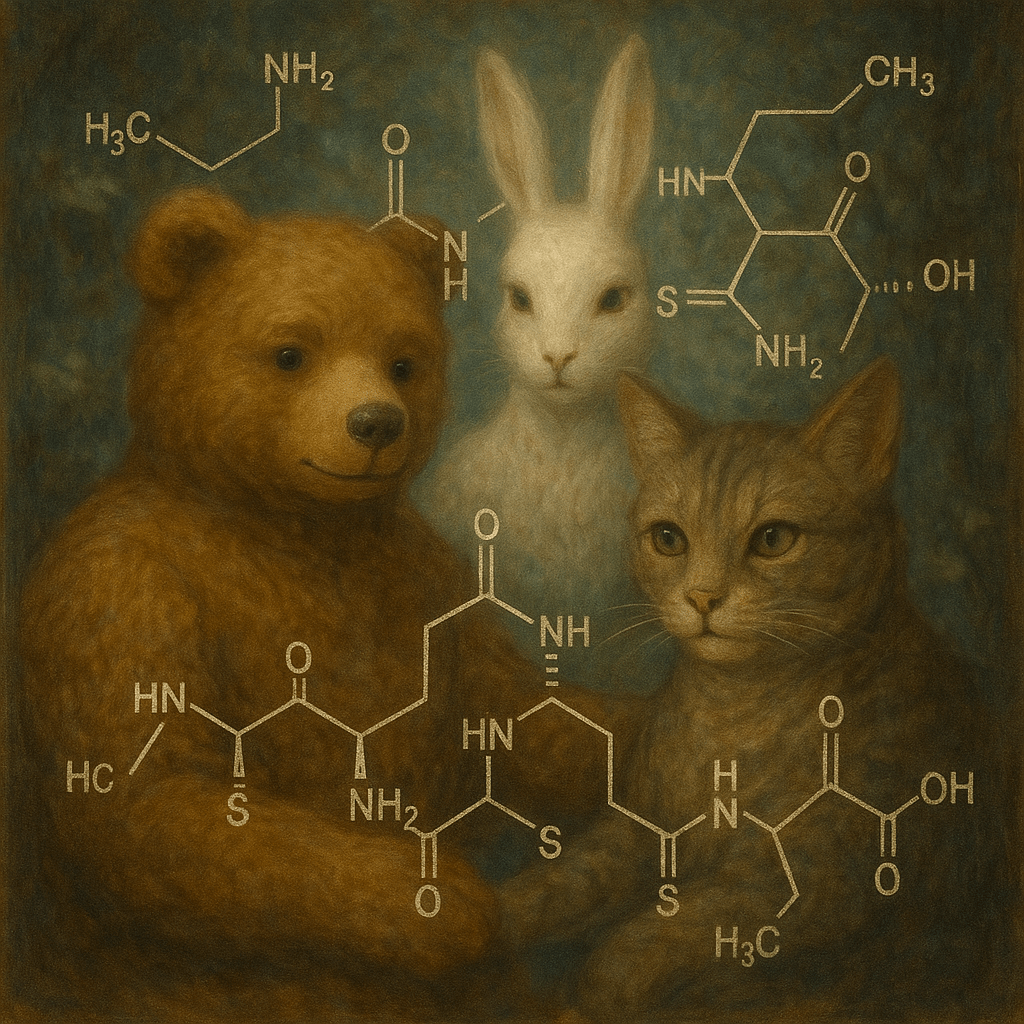
At a well-attended press conference held at the Soft Meaning Forum in Geneva’s newly refurbished Iconodome, IASC officials revealed the first major product of their reform agenda: a reconceived version of the ancient Yin and Yang symbol—reimagined in the plush and enigmatic forms of a Teddy Bear and a Cat.
From Dualism to Snuggualism
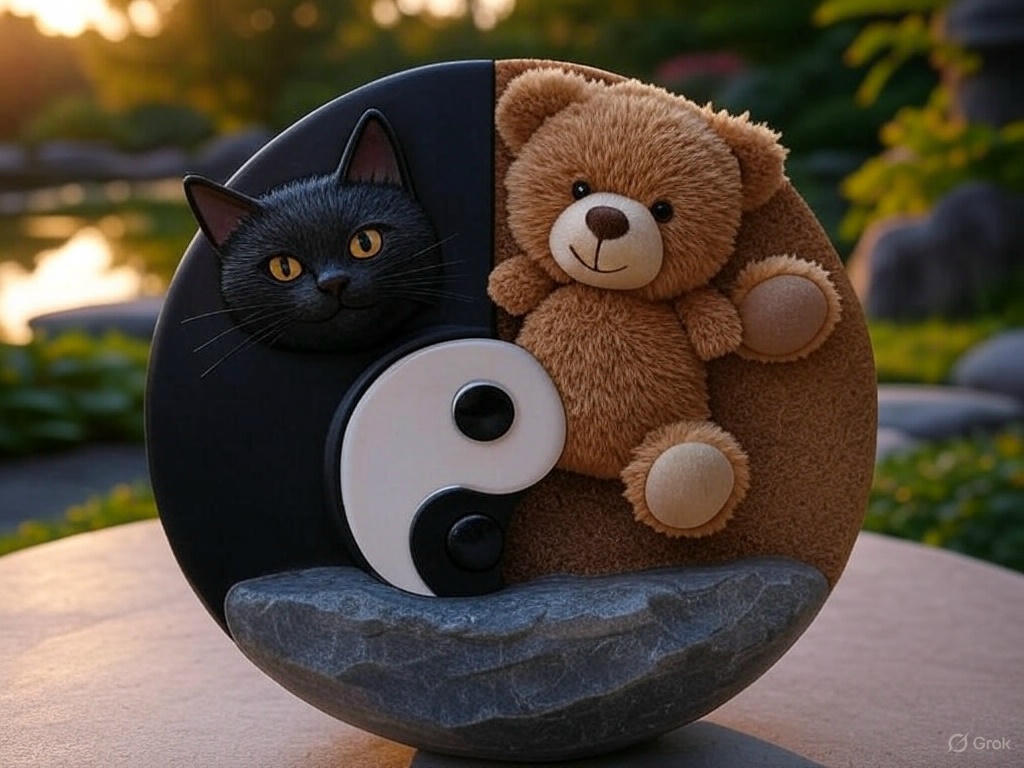
Dubbed the Teddy-Cat Symbol of Relational Flow, the new design replaces the traditional black-and-white teardrop with a stylized loop of curled plush bear and curled cat. The positioning echoes the classic interplay of opposites, but with a notable affective shift. Where Yin and Yang represent dual forces like dark and light, feminine and masculine, the Teddy-Cat adaptation foregrounds emotional postures: comfort vs. independence, softness vs. mystery, grounded affection vs. elusive presence.
“This is not a rejection of ancient wisdom,” emphasized Dr. Ivana Plüm, head of Symbolic Systems at IASC. “It’s an update—a psychosocial evolution of symbolic language. In the post-anxious era, people don’t just want balance; they want emotional resonance.”
A Symbol for the Age of Emotional Complexity
The psychosocial argument behind the redesign rests on research in attachment theory, interspecies projection, and cultural semiotics. According to a joint IASC-Université de Bruxelles study, contemporary individuals increasingly relate to the world through symbolic companions—with cats and teddies ranking highest in affective projection tests.
“Teddies represent stable emotional memory: they are the protectors of childhood fear, trauma, and innocence,” explained psychologist Dr. Jerome Minz, who contributed to the study. “Cats, meanwhile, symbolize the unpredictable, the independent emotional other. Together, they embody the modern tension between intimacy and autonomy.”
In an era marked by paradoxical needs—to be connected, but not overwhelmed; to feel safe, but not controlled—the Teddy-Cat duality offers a richer framework than binary opposites. It invites a gentle dialectic, where emotional complexity is not resolved but embraced.
Global Reception & Symbolic Diplomacy
Reactions to the announcement have ranged from deeply moved to deeply confused.
Spiritual influencers across platforms have begun sharing the Teddy-Cat symbol with hashtags like #Snuggualism, #SoftBalance, and #YangButFurry. Meanwhile, traditionalist symbologists, especially from East Asian philosophical circles, have expressed cautious concern.
“We respect the playful intent,” said a representative from the Pan-Daoist Image Council in Hangzhou. “But symbols carry cosmological weight. Cats may be wise, but can they hold the Tao?”
The IASC insists that cultural sensitivity has been central to the redesign. A subcommittee on Transsymbolic Ethics was consulted, and spiritual figures from multiple traditions were involved in review processes. The symbol is not intended as a replacement, but as a parallel offering, suited to therapeutic contexts, postmodern liturgies, and youth-centered rituals.
What’s Next?
IASC officials hinted that more reimagined symbols are in the works, including a reinterpretation of the infinity symbol using interlocking snails, and a multi-emotional variant of the classic peace sign rendered in melting ice cream cones.
But for now, the Teddy and the Cat have taken center stage—not as mere mascots, but as metaphysical agents of the emotional imagination.
As Dr. Plüm concluded, holding up a soft-printed scroll of the new symbol:
Let this be a sign not of division or fusion, but of cozy mutual difference. The future of symbolic thinking is not harder—it’s furrier.



Leave a comment