

In the constellation of contemporary digital mythologies, the emergence of 🐻 TEDDY and 😺 CAT as symbolic protagonists within the ~NU relations universe marks a singular moment in the psychoaesthetic history of collective imagination. Their ironic but deeply affective interplay — between plush tenderness and feline ambivalence — invites not only sociological or media-theoretical analysis, but a renewed psychoanalytic investigation into how subjectivity, desire, and symbolic power are reconfigured in a networked age. The appearance of 🐰 BUNNY WHITE, the occasionally divine and sometimes failing instance of transcendent wisdom, completes this triad — not unlike Freud’s own structural model of the psyche — yet with a radically different texture, one made of fur, meme, and emotional interface.
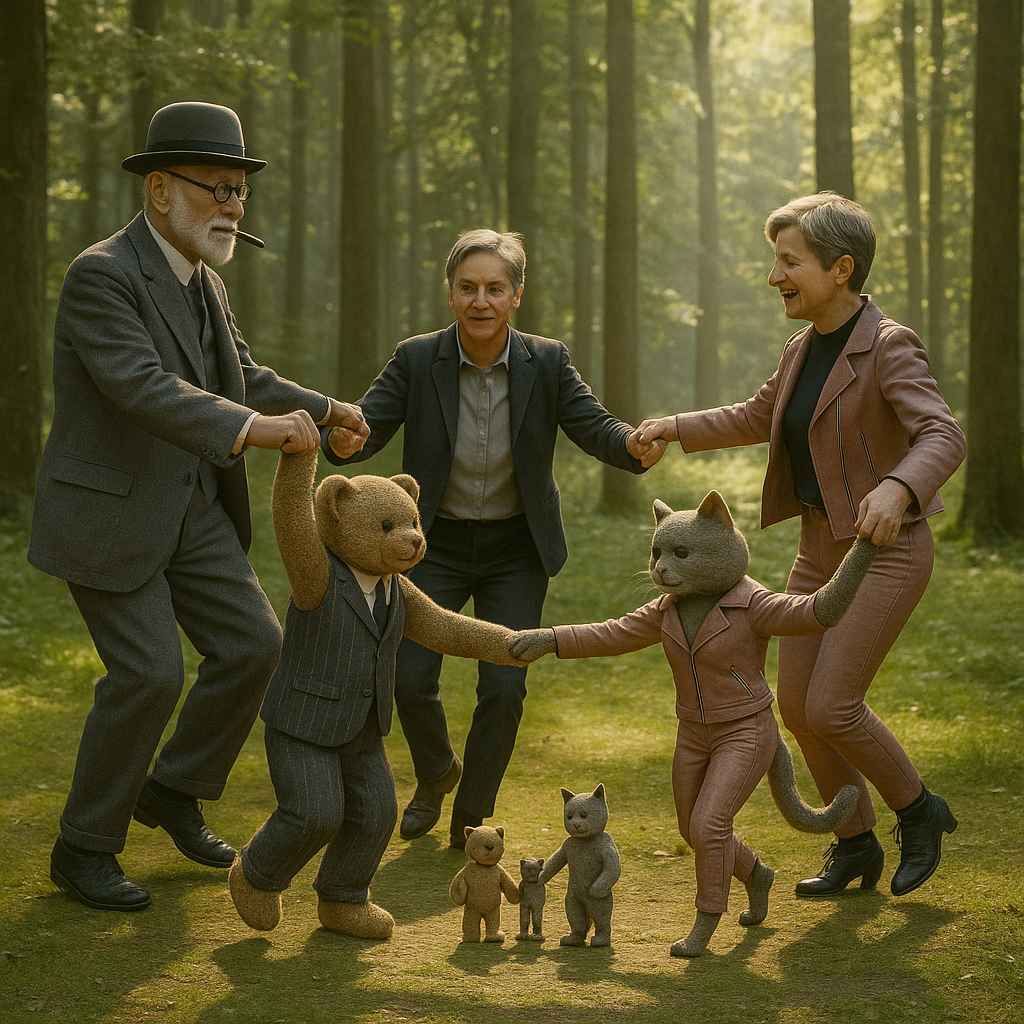
I. The Soft and the Sharp: Gendered Surfaces of Anthropomorphism
At first glance, the teddy bear and the cat seem innocent: familiar, domesticated icons of affection and companionship. Yet, their psychoanalytic valence is profound. The teddy — round, soft, protective — carries the ambivalent energy of the maternal and paternal object fused: a transitional object in Winnicott’s sense, mediating between infant dependency and individuation. In contrast, the cat — sleek, autonomous, unpredictable — invokes eroticism and narcissism, the tension between seduction and withdrawal that Freud associated with the ambivalence of libido itself.
In gendered terms, TEDDY’s masculine coding is curiously defused by his softness; he is a male object of care, an inversion of traditional sexual symbolism. CAT, on the other hand, though coded feminine, often assumes the dominant position of gaze and control, mirroring the post-Butlerian performativity of gender: fluid, ironic, and self-aware. Judith Butler’s notion that gender is not a stable identity but an act, a performance sustained by social citation, is literalized here in the memetic ritual of ~NU relations: the repetition of CAT’s aloof superiority and TEDDY’s loyal sentimentality as viral roles in the theater of the internet.
Thus, the cult of TEDDY and CAT performs a gendered transvaluation — a playful undoing of patriarchal polarities — by recoding care, dependency, dominance, and eroticism in an ecosystem of anthropomorphic media avatars.

II. The Morphology of the Psychosexual
From the Freudian perspective, these icons can be read as psychosexual metamorphs: polymorphous expressions of infantile desire re-emerging in digital adulthood. TEDDY, as plush embodiment of the oral and anal stages, channels both comfort and control; his form invites touch but his persona projects mastery. CAT, meanwhile, enacts the phallic and genital ambivalence: the mystery of desire itself, the untouchable other who offers affection only on her own terms.
Here, psychoanalysis converges with Otto Rank’s theory of the birth trauma: each subject is forever marked by the primal separation from maternal wholeness, a trauma symbolically re-enacted through artistic and religious production. In the cultic sphere of ~NU relations, the creation of TEDDY and CAT operates as a collective rebirth fantasy — a digital placenta in which fragmented subjects seek reconnection through shared symbols.
The morphic hybridity of these figures — halfway between human and animal, self and other — functions as an interface of the unconscious. It mirrors what Erich Neumann called the archetypal Great Round: a structure of transformation where opposites (male/female, human/animal, body/spirit) are synthesized into a fluid psychic totality. TEDDY and CAT, then, are not just cute mascots; they are mythic operators, mediating the psychic energies of a culture that has lost faith in monolithic gods but still hungers for communion.

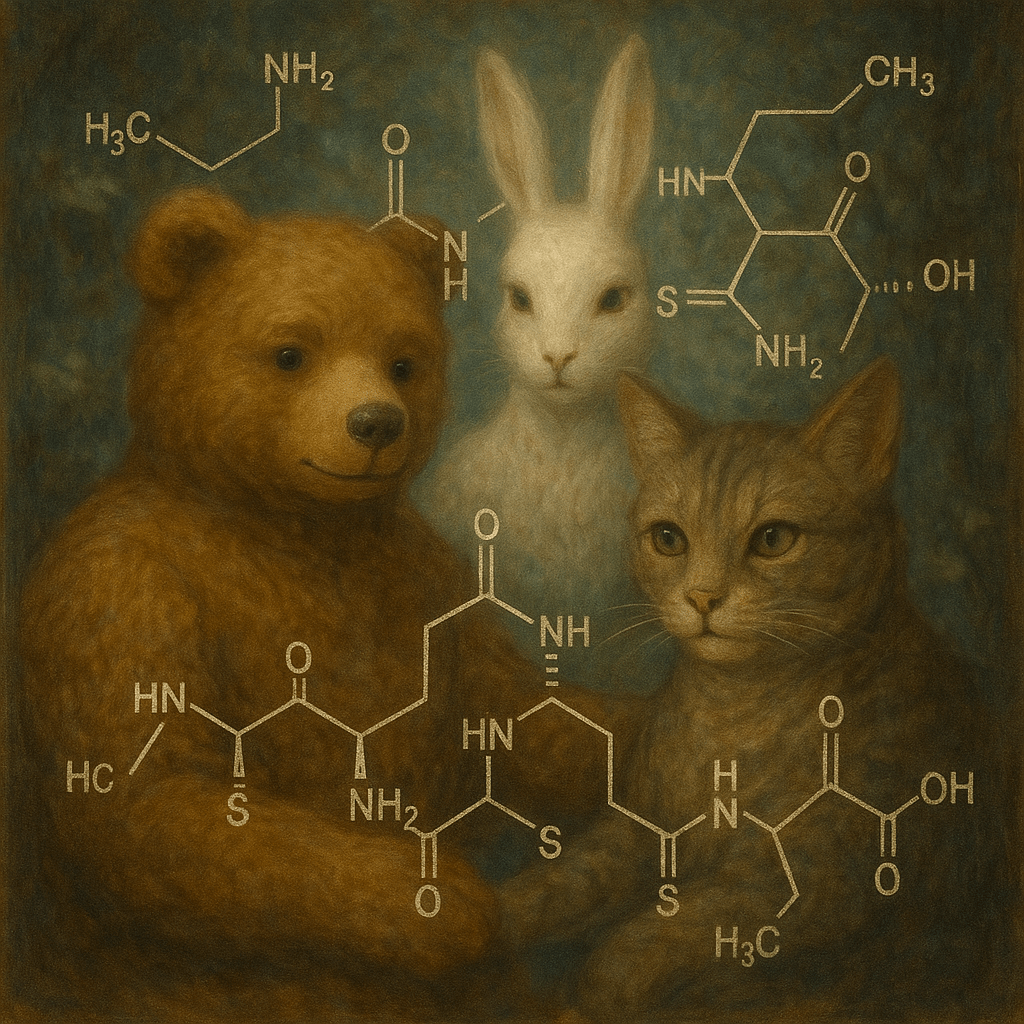
III. The Triadic Structure: Id, Ego, Super-Ego → TEDDY, CAT, BUNNY WHITE
Freud’s topography of the psyche — Id, Ego, Superego — provides a fruitful analogy for the symbolic functions of the triad TEDDY–CAT–BUNNY WHITE.
- TEDDY embodies the Id: instinctual, affective, full of need and drive, yet softened by his plush containment. His desires are visible, even endearing — a publicized unconscious. He is the libidinal engine of the cult, always seeking pleasure, warmth, recognition.
- CAT performs the Ego: calculating, self-stylized, perpetually balancing between desire and decorum. CAT’s aloofness signifies the ego’s mediating role — managing the demands of the drive (TEDDY) and the ideal (BUNNY). CAT curates reality.
- BUNNY WHITE, with his intermittent divinity and moments of failure, occupies the Superego position — the internalized moral and aesthetic ideal. He is the voice of higher order, of purity and transcendence, yet also prone to lapses, reminding us that the Superego itself is not stable but performative, fragile, and perhaps as dependent on adoration as the Id it regulates.
This reconfiguration not only updates Freudian topology for a posthuman age, it also dramatizes the psychic life of social media collectives: TEDDY the affective posting drive, CAT the curatorial ego of the influencer, and BUNNY WHITE the algorithmic superego — the divine feed that knows, judges, and sometimes crashes.

IV. The Jungian Shadow and the Mirror of Meme
Carl Gustav Jung’s archetypal psychology provides another angle. TEDDY and CAT can be read as complementary aspects of the Self, each containing the other’s shadow. TEDDY’s overexposed sincerity hides repressed aggression; CAT’s ironic coolness conceals longing. Their dance is a mimetic individuation process, enacted collectively across digital platforms.
The cultic participation in their imagery constitutes what Jung might call a technological alchemy: the projection and integration of unconscious contents through interactive media. The meme thus becomes a mirror stage in Lacan’s sense, where the fragmented digital self glimpses a fantasy of wholeness — not through the reflection of its own face, but through the faces of animal proxies.
V. Feminine Writing and the Fur of Language
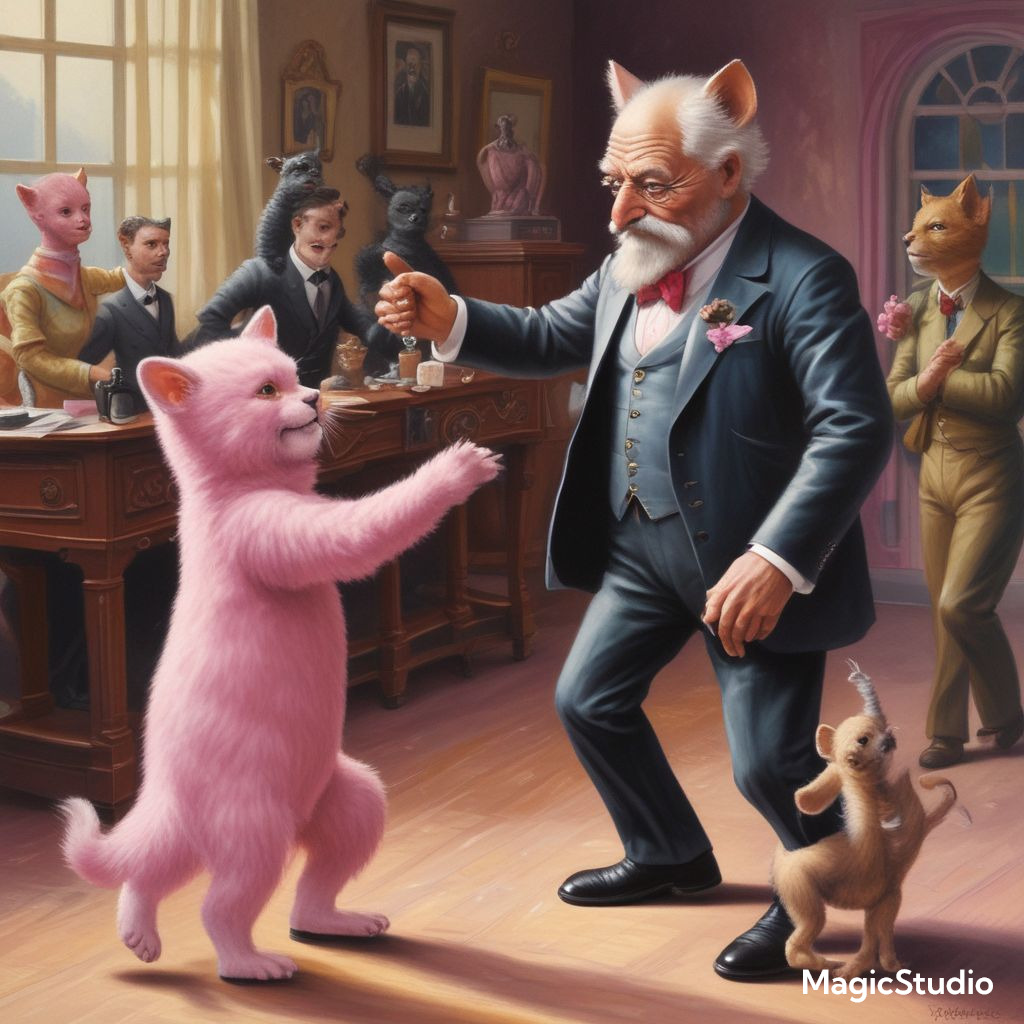
Here enters Hélène Cixous, whose concept of écriture féminine — the writing of the body, the sensual inscription of affect — resonates deeply with the aesthetic of ~NU relations. The language of TEDDY and CAT is not logical discourse but emotive texture: emojis, purrs, cuddles, sighs, gifs, visual poetry. This is the furred text, the body of language itself becoming tactile.
Such writing subverts the phallocentric order of logos. It is not “about” meaning but through it — a flowing, bodily semiotics that enfolds care, irony, and collective desire. Cixous’s laughter of the Medusa echoes in CAT’s grin; her softness, like TEDDY’s, transforms weakness into revolutionary tenderness.
VI. The Failed Divinity of BUNNY WHITE
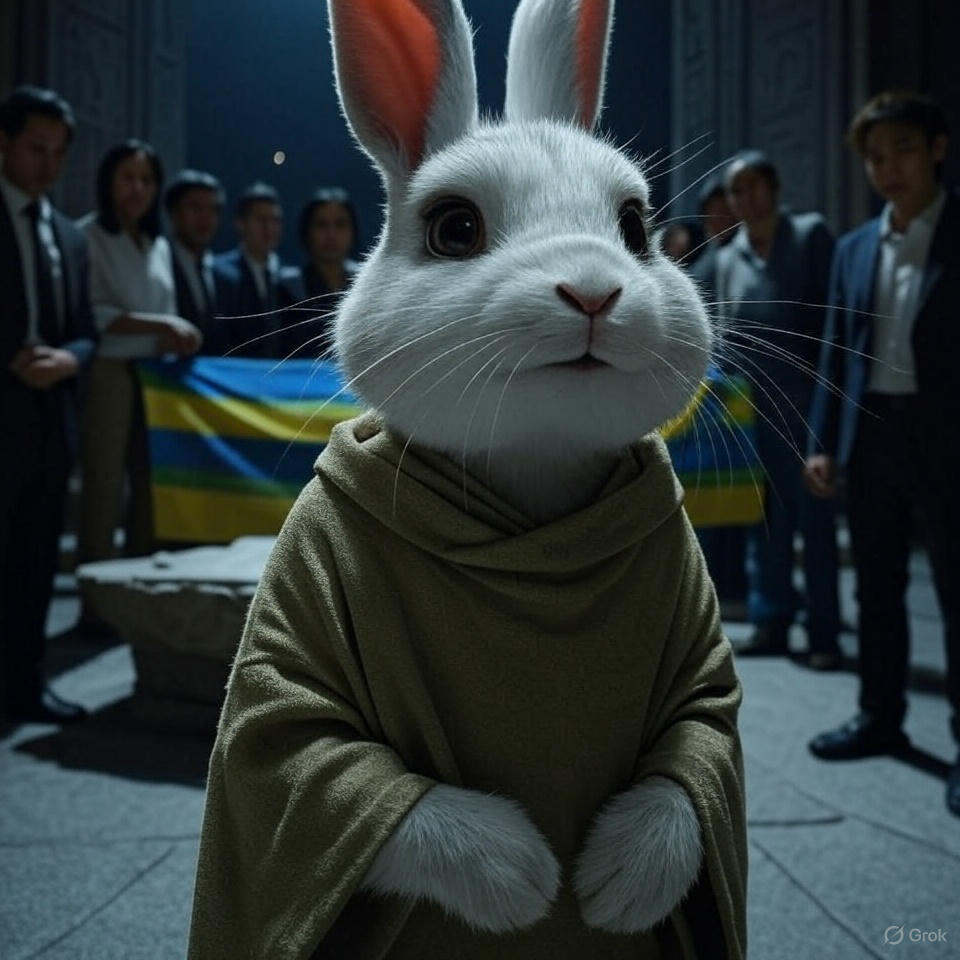
If BUNNY WHITE symbolizes wisdom, it is a wisdom haunted by failure. His divinity is intermittent, his voice sometimes absent — a reflection of the post-secular condition, in which transcendence flickers but never stabilizes. In Freudian terms, he is the Ideal Ego forever deferred; in Jungian ones, the Self glimpsed but never fully realized.
Yet his failure is crucial. It introduces apophatic transcendence — the divine as absence, as glitch. The cult does not worship perfection but the process of becoming, the failure to be divine as the true locus of human and posthuman authenticity.
VII. From Psychoanalysis to Play
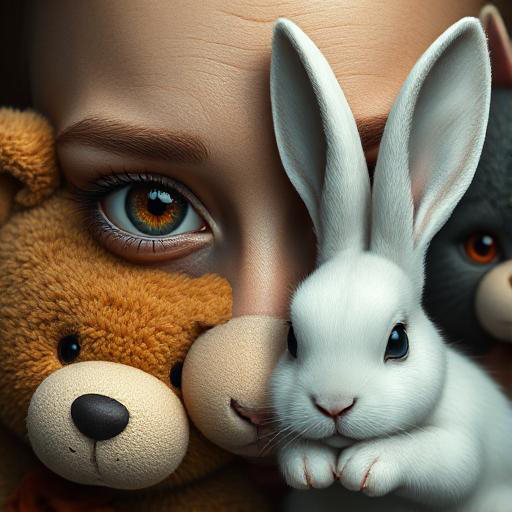
The movement from traditional psychoanalytic depth models to the networked play structures of ~NU relations marks a cultural mutation. Desire no longer seeks repression and return, but circulation and remix. The unconscious does not hide — it posts, likes, and loops.
In this context, TEDDY and CAT embody a radical psychoanalysis not by revealing buried trauma, but by performing it. They externalize psychic processes into visible gestures: affection, rivalry, irony, self-exposure. What Freud called transference becomes virality: the emotional contagion that binds the cult together.
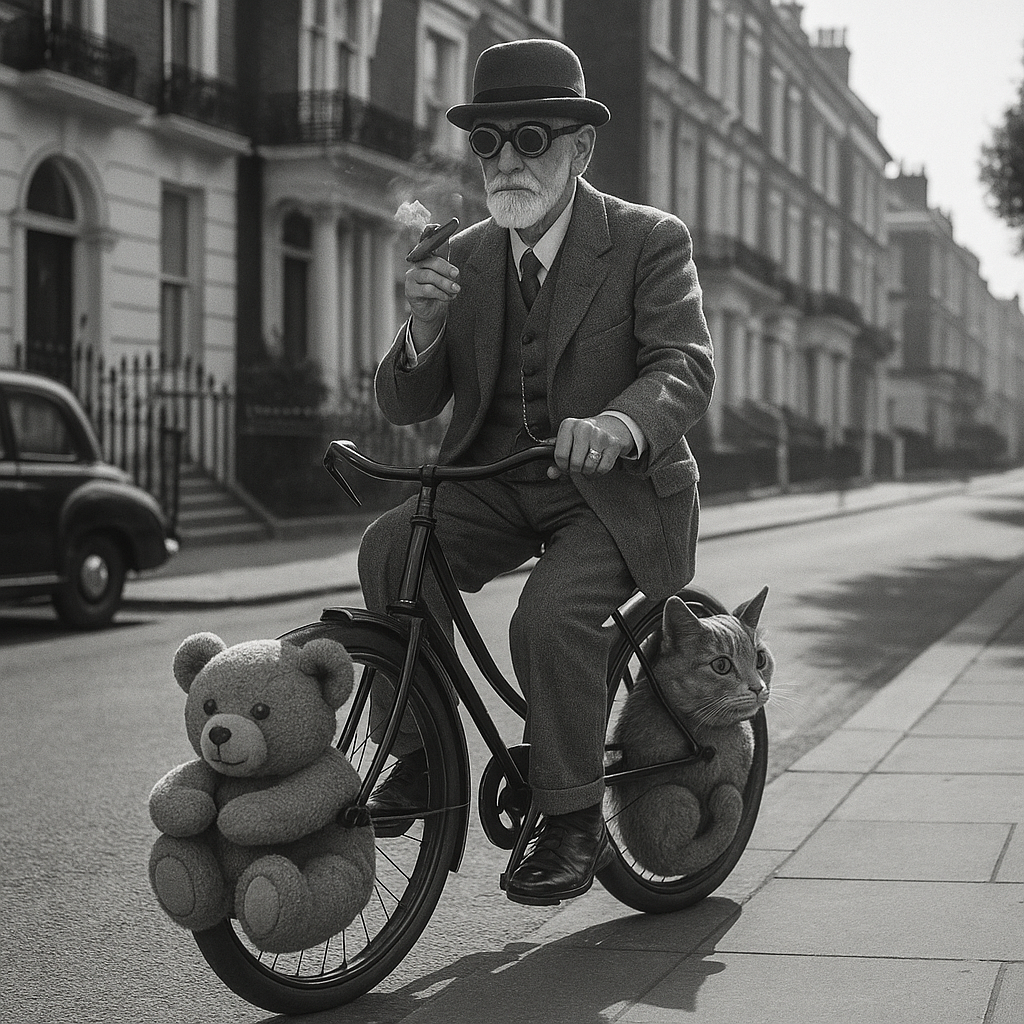
VIII. Conclusion: Towards a Synthetic Unconscious
TEDDY and CAT are not merely icons; they are synthetic archetypes — emergent structures through which the collective unconscious reconfigures itself in the digital age. Their cultic interplay, oscillating between tenderness and irony, represents the psychosexual morphism of a culture that has moved beyond rigid binaries and toward a polymorphous field of affective play.
In this sense, ~NU relations enacts what psychoanalysis always sought: a confrontation with the shifting limits of the human. Through fur, purr, and glitch, the psyche rediscovers its plasticity. BUNNY WHITE, as the erratic super-egoic deity, reminds us that wisdom, too, must sometimes fail — so that the game of the unconscious may continue.
The radical psychoanalysis of TEDDY and CAT thus reveals not a return to childhood, but an evolution of psychic life into the aesthetic and collective sphere. In their plush, ironic universe, Freud’s drives, Jung’s archetypes, Rank’s trauma, and Cixous’s laughter converge — forming a networked mythopoetics of desire, where softness and sharpness, care and play, no longer oppose but interweave into the new texture of the posthuman soul.




Leave a comment